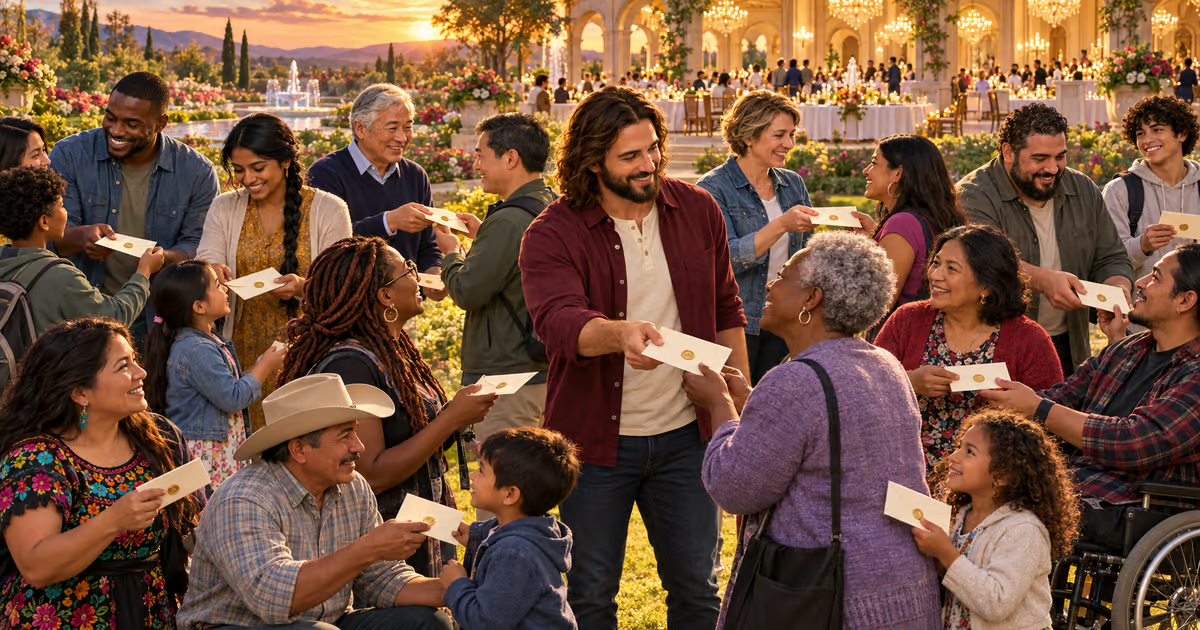
Invitation to the Kingdom of God
THE TWENTIETH SUNDAY AFTER PENTECOST, OCTOBER 11, 2026
MATTHEW 22:1-14
From the Gospel reading: “Friend, how did you get in here without a wedding robe?”
When I was a girl, my mother sewed new church dresses every year, for my two little sisters and me. She sewed velveteen dresses for Christmas. For Easter it was white cotton or flower-print dresses with pastel satin ribbons at the waist – a different color for each of us. White socks and black patent leather Mary Janes, or white shoes for Easter. My little brother’s church attire was a blue blazer with trousers (or shorts when he was too little for long pants), shirt and tie. His usually unruly hair was wetted down and combed. Leather shoes. My father wore a suit and tie, and my mother stayed home. She had a bone to pick with the church and refused to attend.
The point is, we learned that for church one wore a Sunday-best outfit. We were proud to get dressed up and look our best. I think this had an effect on our behavior as well. It certainly affected our view of church as a special place, set apart from the harum-scarum world of classrooms and playgrounds.
We also wore these new duds for Christmas Day dinner with extended family. Same for Easter Day. Invited family and close friends sat at dinner on these occasions. Our best manners were on order.
Now we hear a parable from Jesus about a king who gives a glorious wedding feast – far superior to our special family dinners — for his son. We understand the king to be God, and the son points to Jesus, though the people don’t yet know for sure that Jesus is the Son of God.
It is important to note that this parable follows immediately after the parable of the wicked tenants: “Listen…there was a landowner who planted a vineyard, put a fence around it, dug a winepress in it, and built a watchtower. Then he leased it to tenants and went away. When the harvest time had come, he sent his slaves to the tenants to collect his produce. But the tenants seized his slaves and beat one, killed another, and stoned another. Again he sent other slaves, more than the first, and they treated them in the same way.
“Then he sent his son to them, saying, ‘They will respect my son.’ But when the tenants saw the son, they said to themselves, ‘This is the heir; come, let us kill him and get his inheritance.’ So they seized him, threw him out of the vineyard, and killed him. Now when the owner of the vineyard comes, what will he do to those tenants?” They said to him, “He will put those wretches to a miserable death and lease the vineyard to other tenants who will give him the produce at the harvest time.”
When he speaks Jesus is in Jerusalem, entering for the final time. The chief priests and Pharisees, hearing this parable, realize that it was they whom Jesus condemns. So angered do they become that they want to arrest him! When they hear the parable of the wedding banquet they are even more disturbed.
In this parable we have the situation where the king throws a lavish banquet, and invites special guests. But they don’t come! So the king sends his slaves to persuade the guests. But they aren’t interested, having what they think are more important things to do – on the farm, in their business. The rest of the invited guests provide the utmost insult to the king, actually killing the messengers.
Let’s pause to interpret this. We have God creating a Kingdom that surpasses all possible human experience or imagination. And God invites God’s people to enter into that Kingdom. The invited guests are the people of Israel, whom God has been patiently forming through time in the wilderness. Eventually, because Moses spends an inordinate amount of time in God’s presence, away from them, the people, led by Aaron, fashion a golden calf to worship instead of the Lord God.
They do this even though the prophets have, time and again, warned them to worship the One God, and forsake idols. This is the first and great Commandment, after all: You shall love the Lord your God with all your heart and soul and mind, and you shall have no other gods. The people have been warned. But they kill the prophets rather than hear what they are saying. They kill the messengers, just as the wedding guests did.
The king is enraged and has his troops kill the invited guests. Then he sends his slaves out into the streets and tells them to bring in anyone they find – both good and bad. What we have here is God calling all the world into the Kingdom of God. One doesn’t need a special invitation, one doesn’t need to be especially worthy. In this way, the king fills his banquet hall, and God fills the Kingdom of God. The king is pleased, and so is God.
Except that the king notices one person who is not in proper attire for a wedding guest. A little like my siblings and me going to church in corduroy overalls and sneakers, instead of our Sunday best. The king speaks to this person:
‘Friend, how did you get in here without a wedding robe?’ And he was speechless. Then the king said to the attendants, ‘Bind him hand and foot, and throw him into the outer darkness, where there will be weeping and gnashing of teeth.’
This shocking judgment seems unjust – after all, this person without a wedding robe had just been swept up from the street into the wedding banquet. How could he know ahead of time to buy and wear the right clothing?
Consider this: since the wedding banquet is the Kingdom of God, and the whole world is invited to come in, something transformative must happen when entering the banquet hall. In a small way the transformation is like my siblings and me getting properly dressed for church, and – amazingly! – this affects our behavior. We become slightly more like model children in church than at home or school.
With respect to the Kingdom of God, we are in the already-but-not-yet time and space. Jesus brought in the Kingdom of God when he was born and grew and ministered here on earth. The Jesus event began the Kingdom of God. It opened the banquet hall for all the wedding guests.
He taught his followers how to behave in the Kingdom of God, so we already live in the Kingdom even though it has not yet been fulfilled. Think of Jesus sending his disciples into the towns and villages, and instructing them to say that the Kingdom of God has come near. And so it has for us, and for all the world, all the invited guests.
But the King, God, looks for something more than our just entering the Kingdom, just hanging out there. God looks for transformation in his guests, transformation of mind, body, and spirit. God expects us to clothe ourselves in righteousness.
Paul in his letter to the Philippians speaks to this, the matter of Christlike transformation: Rejoice in the Lord always; again I will say, Rejoice. Let your gentleness be known to everyone. The Lord is near. Do not be anxious about anything, but in everything by prayer and supplication with thanksgiving let your requests be made known to God. And the peace of God, which surpasses all understanding, will guard your hearts and your minds in Christ Jesus.
Finally, brothers and sisters, whatever is true, whatever is honorable, whatever is just, whatever is pure, whatever is pleasing, whatever is commendable, if there is any excellence and if there is anything worthy of praise, think about these things. As for the things that you have learned and received and heard and noticed in me, do them, and the God of peace will be with you.
Instructed by Jesus, and modeled by Paul, we put on our wedding garment as transformed people of the Kingdom. Think of the gracious plenty – as my father-in-law used to say when his wife spread the table with an especially luscious meal – that God provides. Amazingly, God opens the door of the banquet hall to every person on earth, who has been or is or will be. All creation is a guest of the Kingdom. And there is plenty for all! No one is hungry or left out or shunned.
Let us live in God’s plenty and share it – and each day honor God’s invitation to the Kingdom.
THANKS BE TO GOD. Amen.